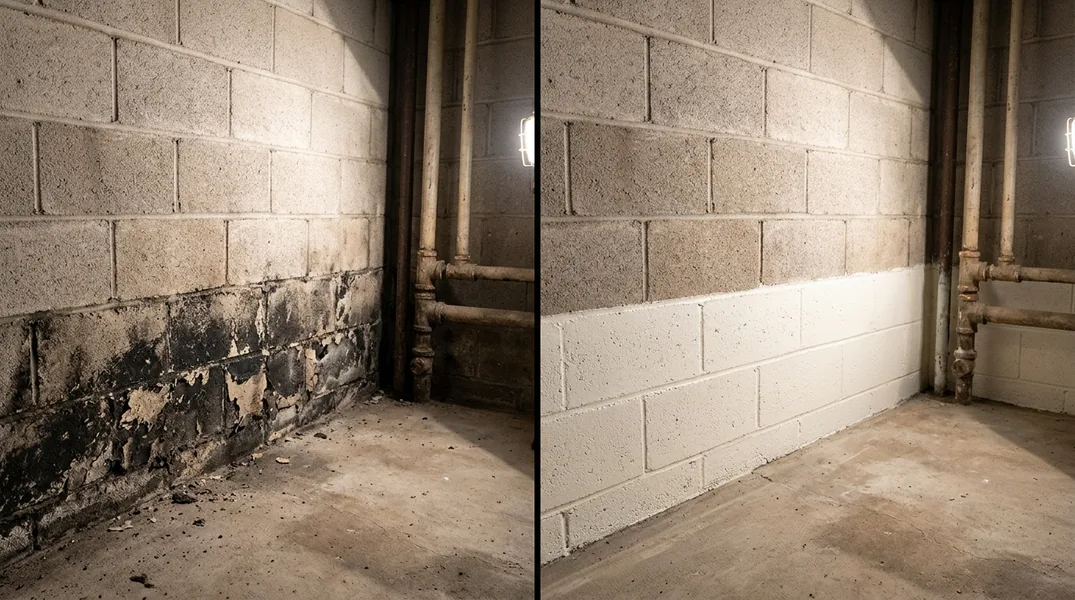
Why Lynchburg Basements Struggle With Water
If you own a home in Lynchburg, you already know that the soil here is not like the sandy or loamy ground you might find in other parts of Virginia. Much of the region sits on dense red clay that drains very slowly. After a heavy spring rain or a summer thunderstorm, water pools against foundations instead of soaking away, and hydrostatic pressure builds up against basement walls. That pressure is the root cause of most seepage, efflorescence, and musty smells homeowners describe.
The problem gets worse as homes age. Concrete foundation walls develop hairline cracks, mortar joints weaken, and the original footing drains (if any were installed) may be clogged with clay and roots. Because the groundwater has nowhere to go, it finds the path of least resistance: through the cove joint where the floor meets the wall, through cracks, or over the top of the footing. Understanding this local geology is the first step in deciding whether interior or exterior waterproofing makes sense for your home.
How Interior Drain Tile Systems Work
An Interior Drain Tile System is installed on the inside of the basement, typically in a trench cut along the perimeter of the floor. A perforated pipe is laid in washed stone, covered with a drainage mat, and connected to a sump pit and pump. When water rises under the floor slab, it enters the system and is pumped away from the house. The wall is usually sealed with a membrane that directs seepage down to the drain tile.
The biggest advantage of interior waterproofing is that it can be done in almost any weather and does not require digging up landscaping, decks, or driveways. It also addresses water that enters at the cove joint, which is the most common leak point in Lynchburg homes. The work is typically faster and less disruptive than exterior excavation, and the system is serviceable from inside the basement if a pump or pipe ever needs attention. For many homeowners, this is the practical choice when the goal is to keep the basement dry and usable.
When Exterior Basement Waterproofing Makes More Sense
Exterior Basement Waterproofing attacks the problem from the outside. The soil is excavated down to the footing, the foundation wall is cleaned and repaired, a waterproof membrane is applied, and a new drain tile and gravel bed are installed at the footing. The trench is then backfilled with gravel and soil that shed water away from the house. This approach stops water before it ever reaches the wall, which can reduce the load on a sump pump and protect the foundation itself.
Exterior work is often the right call when the foundation has structural issues, when the original footing drain has failed, or when the grading around the house slopes back toward the foundation. It is also common on new construction or during a major remodel. The tradeoff is cost and disruption: excavation is labor intensive, and you may need to move decks, patios, or plantings. In Lynchburg's red clay, exterior membrane systems can be very effective, but they must be installed with proper drainage and backfill to avoid trapping water against the wall.
Drain Tile vs Exterior Membrane: A Practical Comparison
Homeowners often ask whether they should choose drain tile or an exterior membrane. The honest answer is that they solve different parts of the same problem. Interior drain tile manages water that has already entered the basement and routes it to a sump. An exterior membrane keeps water out of the wall in the first place. Many homes benefit from a combination: exterior protection on the outside and interior drainage as a backup for water that gets under the slab.
In Lynchburg's clay soil, an exterior membrane alone can sometimes trap moisture if the footing drain is not functioning. Likewise, interior drain tile handles seepage but does not relieve pressure on the foundation wall. A professional assessment should look at the soil, the grading, the age of the foundation, and the leak pattern before recommending a solution. For a closer look at how these systems fit together, see our Basement Waterproofing overview. If you are also dealing with foundation cracks or bowing walls, Foundation Waterproofing may need to be part of the conversation.
Basement Waterproofing Cost in Lynchburg: What to Budget
Cost is usually the deciding factor for homeowners comparing interior and exterior options. Interior drain tile systems are generally less expensive because they require less excavation and can be completed in a few days. Exterior waterproofing costs more because of the digging, disposal, and restoration work involved. The exact figure depends on the length of the foundation, the number of leak points, whether a sump pump is needed, and whether structural repairs are required.
It is smart to get a written scope of work that explains what is included: drain tile, sump pump, membrane, discharge line, and any concrete patching. Be cautious of quotes that do not specify the materials or that promise a dry basement without addressing the source of the water. You can review general pricing guidance on our site, and we recommend a free estimate so you can compare options for your specific home. A properly installed system should last for decades, so the lowest bid is not always the best value.
Basement Waterproofing Near Me: Choosing the Right Approach in Lynchburg
If you are searching for basement waterproofing near me in the Lynchburg area, start by identifying where the water is coming from. A damp corner, a white powdery stain, or a puddle along the cove joint each tells a different story. A professional inspection should include the interior, the exterior grading, and the downspout discharge. In many cases, the fix is a combination of improved drainage and an interior system rather than a full exterior excavation.
Lynchburg Waterproofing serves homeowners throughout Lynchburg and the surrounding communities, including Forest, Madison Heights, and Timberlake. If you are tired of dealing with a wet basement, call (434) 266-6497 to schedule a free estimate. We will explain your options in plain language and help you choose the approach that fits your home, your soil, and your budget.
Looking for a professional basement waterproofing contractor in Lynchburg? Lynchburg Waterproofing responds fast for all your basement waterproofing needs.
Get a Free QuoteOur services: Basement Waterproofing · Interior Drain Tile System · Exterior Basement Waterproofing