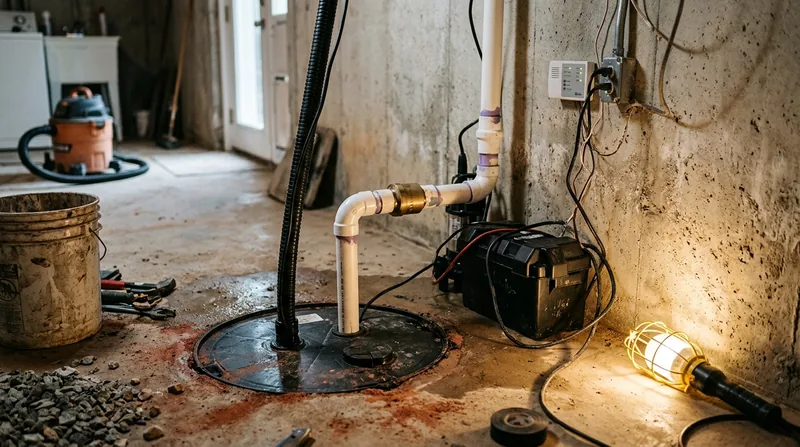




Lynchburg sits on the Piedmont red clay that blankets the hills above the James River, and that clay holds water long after a storm passes. In Fort Hill and Diamond Hill, the 1900s brick and frame houses have stone and early block basements that seep along the footing every time the water table climbs. Out in Forest and Timberlake, the 1980s and later subdivisions have poured concrete full basements with sump pits, and those pits only work as long as the pump has power. Battery Backup Sump Pumps in Lynchburg keep the pit dry when the grid goes down, which is exactly the moment a storm-driven water table is at its highest. We size the battery, charger and alarm to your pit and your pump, so a summer thunderstorm or a tropical remnant does not turn your finished basement into a wet basement.
If you already have a primary pump, the backup is the piece that decides whether a power outage becomes a cleanup. Start with a sump pump installation and replacement review if the primary unit is old, and add the backup on the same visit.
Why a Battery Backup Matters on Lynchburg's Clay and Steep Lots
The dominant failure mode here is not a worn pump, it is a pump with no power during the exact storm that fills the pit. Piedmont red clay over granite and schist drains slowly, so runoff from the hills in Boonsboro and Peakland keeps arriving at the footing drain for hours after the rain stops. Summer thunderstorms and tropical remnants knock out power in the same window, and the pit fills faster than a dead pump can be replaced. A backup that runs on a charged battery buys you the hours you need.
- It keeps the sump basin emptying when a storm takes the power out in Forest or Timberlake.
- It covers the slow-draining clay soils that keep feeding the footing drain long after the rain ends.
- It sounds an alarm before the water reaches the basement floor, not after.
- It protects a partly finished basement in Tyreeanna where a wet floor means ruined materials.
- It runs a maintenance check so you know the battery holds a charge before storm season.
A backup is cheap insurance against the one night the primary pump cannot run.
Key info: After a July thunderstorm knocked out power in the Rivermont streets for most of an evening, a homeowner with a battery backup watched the pit rise and fall normally while the neighbors bailed. The primary pump was fine. The grid was not.
For official guidance on sump discharge and drainage connections, check the City of Lynchburg's permits and inspections pages before you alter how the pump discharges: City of Lynchburg.
How We Set Up a Backup System in a Lynchburg Basement
We start by looking at the pit, the primary pump and the discharge line, because a backup bolted onto a bad setup just fails twice. In the older stone and brick basements in Fort Hill, the pit is often shallow and tight, so we check clearance before we pick a battery and charger. In the poured concrete basements in Forest and Timberlake, the pit is usually generous and the job is straightforward. Either way, the sequence is the same and we explain each step before we start.
- We inspect the sump basin, the primary pump and the check valve to confirm the pit can take a backup unit.
- We size the battery and charger to the pump draw and to how long outages typically last here.
- We mount the backup pump and float switch so neither interferes with the primary float.
- We tie the backup into the existing discharge line with a check valve on each pump so they do not fight each other.
- We install a high-water alarm and test the whole system under a simulated outage.
- We walk you through the maintenance check and the battery replacement interval.
If the pit itself is undersized or the drain tile is clogged, we say so before selling you a backup that cannot keep up. In that case an interior drain tile system is the better first move.
Key info: A Madison Heights split-level had a working primary pump and a dead backup battery. We replaced the battery, added a high-water alarm and tested the float. The next storm, the alarm never sounded because the pit never got high. That is the result you want.
Backup Options We Fit to Lynchburg Pits
Not every pit needs the same hardware. A shallow stone-walled basin in Diamond Hill takes a different unit than a deep poured pit in Forest, and the battery chemistry matters when outages stretch past a few hours. Here is how the common approaches compare in the field.
| Approach | Description | Best for |
|---|---|---|
| Trickle-charge battery backup | A dedicated backup pump on a charged battery with an automatic charger and float switch. | Most homes with a single primary pump and short outages. |
| Combination primary and backup unit | One housing with a 120V primary pump and a 12V backup pump sharing the pit. | Tight pits in older Fort Hill and Diamond Hill basements. |
| Extended-run battery bank | Larger battery capacity for outages that last many hours. | Homes on the hills where storms cut power for a full evening. |
| Backup with high-water alarm | Audible alarm that triggers if the pit rises past the normal shutoff point. | Finished or partly finished basements in Boonsboro and Tyreeanna. |
We match the unit to the pit and the pump, and we tell you plainly when a simple battery swap is all you need.
Battery Backup Sump Pumps Cost in Lynchburg: What to Expect
Most backup installations here start around $900, and that figure covers a backup pump, a charged battery, a charger, a check valve and a test run. The price moves with the pit, not with the brand name on the box. A deep poured pit in Forest with a clean discharge line is a quick job, while a shallow stone basin in Fort Hill may need a combination unit and more fitting time. If the primary pump is also due for replacement, doing both on one visit saves labor. Get two or three estimates and ask each one what battery capacity they are quoting, because that is where cheap bids cut corners.
Our full breakdown of typical figures lives on the pricing page, and a free inspection confirms which option fits your pit.
Choosing a Battery Backup Sump Pump Contractor Near Lynchburg
Ask three things before you sign: is the contractor licensed and insured, will they show you the battery and pump they intend to install, and can they explain how the backup ties into your existing discharge line. A backup is a small job, but a bad install can back-feed the primary pump or leave the float switch where it jams. Ask for references from basements like yours, whether that is a stone-walled Fort Hill cellar or a poured Forest basement. And confirm who pulls any permit if the discharge connection changes, because rules vary by jurisdiction and the local building department has the final word.
Reach us through the contact page or call (434) 266-6497 to set a free inspection.
If your pit is dry but your walls seep after storms, the backup is not the whole story. A foundation crack repair visit may be the better first step.
Battery Backup Sump Pumps in Lynchburg: Pricing Guide
| Service | Price | Details |
|---|---|---|
| Battery backup pump installed | Starting at $900 | Backup pump, charged battery, charger, check valve and a full test run included. |
| Combination primary and backup unit | Starting at $1,250 | Fits tight pits in older basements and replaces a tired primary pump at the same time. |
| Extended-run battery bank | Starting at $1,450 | Larger capacity for long outages; price moves with battery size and pit depth. |
| High-water alarm add-on | Starting at $150 | Audible alarm installed and tested with the backup during the same visit. |
| Complex or large-scale job | On estimate | Shallow stone pits or shared discharge lines need an on-site look before a number. |
| Estimate | Free | Response within 24h at (434) 266-6497, no obligation to book. |
Indicative pricing, the exact cost depends on square footage, finish, and site access. Free personalized estimate within 24h at (434) 266-6497.


