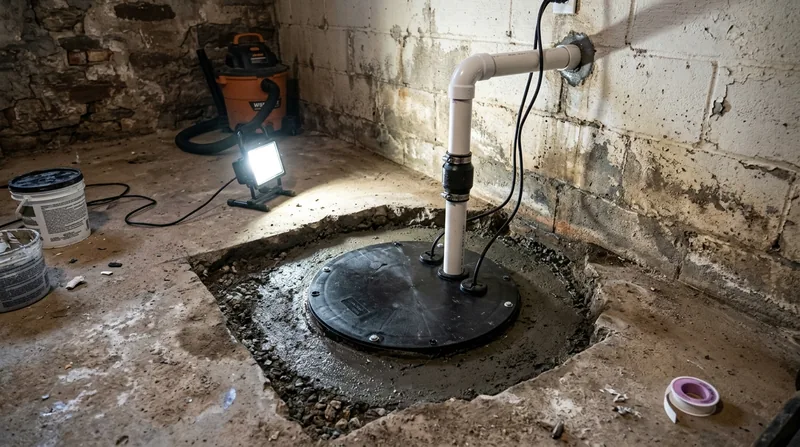




If your sump pump has quit, is cycling constantly, or you are finishing a basement in a 1920s Rivermont house or a 1990s Timberlake build, Sump Pump Installation & Replacement in Lynchburg is the fix that keeps storm water out of the lowest level of your home. The ground here is Piedmont red clay over granite and schist, so after a July thunderstorm or a tropical remnant stalls over the Blue Ridge, water sheets downhill and sits in the soil instead of draining away. In Fort Hill and Diamond Hill, stone and brick foundation walls weep along the footing, and in Boonsboro and Peakland split-levels the pump runs every time the water table rises. A correctly sized pump in a sealed basin, with a check valve and a discharge line that actually carries water away from the house, is what separates a dry floor from a wet one. We install and replace sump systems across the city, and we start with a free basement inspection so the pump matches the water you actually get, not a guess.
Why Sump Pump Failure Hits Lynchburg Basements Hard
Lynchburg sits in a bowl of hills where the James River bottoms and the creeks that drain the slopes rise fast after summer storms. The clay soil drains slowly, so hydrostatic pressure builds against footing drains and older block walls, and a pump that was adequate in a dry spring will fall behind in a wet August. Freeze-thaw winters open cracks in 1940s block walls, and the spring melt sends that water straight to the sump basin. When the pump is undersized, clogged, or the discharge line is buried in a low spot, the basin overflows and you get a wet basement.
- Clay soil holds storm water for days, so the pump cycles long after the rain stops.
- Older stone and brick footings in Fort Hill and Diamond Hill leak sediment that clogs pump intakes.
- Short discharge lines that dump water next to the foundation send it right back inside.
- Cheap cast-iron pumps seize after a few seasons of grit and stop without warning.
- No check valve means water drains back into the basin and the pump restarts all night.
A pump is only as good as the basin, the check valve, and the discharge route around it, which is why we look at the whole system before we quote a replacement.
Key info: After a storm in the Timberlake and Forest subdivisions, we routinely find pumps running every 30 seconds because the discharge line was run into a shallow ditch that fills with clay silt. Moving that line to a graded daylight outlet solves more wet basements than a bigger pump ever will.
Permits for work that alters drainage or the sanitary connection of a sump discharge vary by jurisdiction, so always verify with the City of Lynchburg building department or your county office before work starts. You can reach the city's permitting office through lynchburgva.gov.
How We Install or Replace a Sump Pump in Lynchburg
We size the system to the water your foundation actually takes in, not to a catalog page. That means measuring the basin, checking the drain tile that feeds it, and tracing where the discharge line goes before we cut anything. In a poured-concrete full basement in Forest or a stone-walled partial basement in the Rivermont streets, the steps are the same, but the basin depth and the discharge route change with the lot. If the perimeter drain is failing, we tell you plainly that a new pump alone will not fix it, and we point you to the interior drain tile system that feeds the basin properly.
- We inspect the basin, the incoming drain tile, and the existing pump to confirm what is failing.
- We set a new sealed sump basin at the low point and connect the perimeter drain or drain tile to it.
- We install a correctly sized pump on a solid base, with a check valve and a lid that keeps debris and humidity out.
- We run a discharge line to a graded outlet, freeze-protected, and extend it well away from the foundation.
- We test the float, the check valve, and the discharge under load, then walk you through what to watch for.
Every job ends with a wet test, so you see the pump cycle and the water leave the house before we pack up.
Key info: In a Boonsboro ranch with a partly finished basement, we replaced a 1/3 HP pump that was tripping the circuit with a 1/2 HP unit, added a sealed lid and a check valve, and rerouted the discharge to a daylight outlet 12 feet downhill. The homeowner had been mopping after every storm for three years.
If you want backup protection for the storms that knock out power, we also fit battery backup sump pumps on the same basin so the system keeps running when the grid does not.
Sump Pump Approaches We Use in Lynchburg Homes
Not every wet basement needs the same hardware. A stone foundation in Fort Hill with a failing footing drain behaves differently from a 2005 poured wall in Forest with a sump basin that was undersized from day one. The table below shows the approaches we use and where each one fits.
| Approach | Description | Best for |
|---|---|---|
| Direct pump replacement | Swap the pump and check valve in an existing basin that is sound and correctly placed. | A pump that has burned out or seized but a basin and drain that still work. |
| New basin and pump installation | Cut and set a new sealed basin at the low point and connect the perimeter drain. | Basements with no sump, or a basin that is too shallow or unsealed. |
| Pump and discharge correction | Reroute the discharge to a graded outlet and add freeze protection. | Pumps that run constantly because water returns to the foundation. |
| High-capacity storm setup | Larger pump, deeper basin, and a backup on the same discharge. | Lots in the James River bottoms or on steep hills where the water table rises fast. |
| Battery backup addition | Secondary pump and battery on the same basin for power outages. | Homes that lose power during summer thunderstorms and nor'easters. |
We recommend the smallest system that handles your actual water load, and we say so when a simple replacement is enough.
Sump Pump Installation & Replacement Cost in Lynchburg: What to Expect
Most straightforward pump replacements in Lynchburg start around From $1,200, which covers a quality pump, a check valve, a sealed lid, and a tested discharge. A full new basin and pump installation runs higher because it involves cutting the floor, setting the basin, and connecting the drain tile. The biggest cost drivers are basin depth, whether the discharge line needs to be rerouted, and whether the existing drain tile is clogged or crushed. Access matters too: a steep Rivermont lot or a finished basement with a tight mechanical closet takes more labor than an open Boonsboro utility room.
We always recommend getting two or three written estimates so you can compare the pump model, the basin size, and what the discharge route includes. A low bid that skips the check valve or buries the discharge line in clay is not a bargain. Our full pricing overview shows the ranges, and we put the exact scope in writing before we start.
Finding a Sump Pump Contractor Near Lynchburg: What to Check
Hiring for sump work near Lynchburg means asking the same questions you would ask any trade. Confirm the contractor is licensed and insured in Virginia, ask for the certificate, and get two or three estimates in writing with the pump model and basin size spelled out. Ask for local references, especially from homes with the same foundation type as yours, and ask who pulls the permit if the discharge connects to a sanitary line. If your neighborhood has HOA rules about exterior discharge or grading changes, check those before work begins.
If you want to talk through your basement before you commit, contact us and we will set up a free inspection. You can also see the neighborhoods we serve on our service areas page.
Key info: Ask any contractor whether they seal the basin lid and install a check valve as part of the price. Those two details keep humidity down in the basement and stop the pump from short-cycling, and they are the first things cut on a cheap bid.
Sump Pump Installation & Replacement in Lynchburg: Pricing Guide
| Service | Price | Details |
|---|---|---|
| Sump pump replacement (existing basin) | Starting at $1,200 | Includes quality pump, check valve, sealed lid, and wet test in a sound existing basin. |
| New sump basin and pump installation | Starting at $2,400 | Cutting and setting a new sealed basin, connecting drain tile, and running a tested discharge line. |
| Pump and discharge line correction | Starting at $1,650 | Rerouting the discharge to a graded outlet with freeze protection to stop constant cycling. |
| High-capacity storm setup with backup | On estimate | Larger pump, deeper basin, and battery backup sized to the lot; needs an on-site look. |
| Travel | Included | In Lynchburg and surrounding areas, no separate call-out or mileage fee. |
| Estimate | Free | Response within 24h at (434) 266-6497, no obligation to book. |
Indicative pricing, the exact cost depends on square footage, finish, and site access. Free personalized estimate within 24h at (434) 266-6497.


