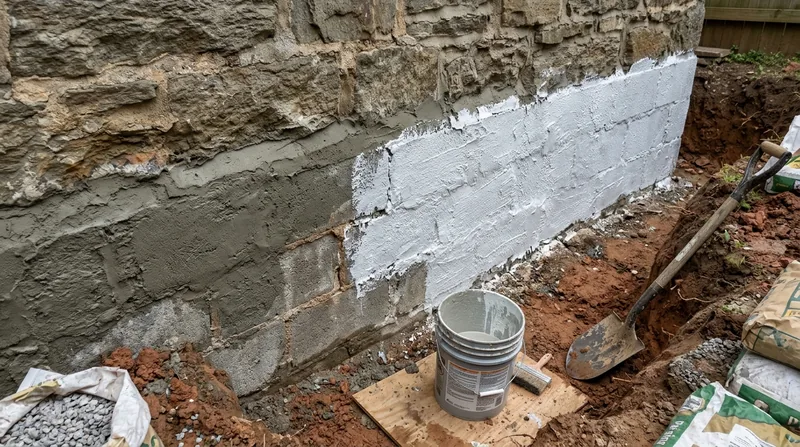




Lynchburg sits on the Piedmont, where red clay soil lays heavy over granite and schist bedrock, and that geology decides how water moves around your foundation. In Fort Hill and Diamond Hill, the 1900s brick and frame houses sit on steep lots with stone or early block cellar walls that have been wicking moisture for a century. Out in Forest and Timberlake, poured concrete walkouts on the hills take on water along the footing after every summer storm. Foundation Waterproofing in Lynchburg means matching the repair to the wall type and the actual water source, not slapping sealer on a wall that is being pushed from behind. We handle parging, crack injection, membrane and crystalline treatments, and drainage correction for block, poured and fieldstone foundations. Start with a free basement inspection and we will tell you plainly what the wall is doing.
Why Lynchburg Foundations Stay Wet: Red Clay, Steep Lots and Freeze-Thaw
The dominant failure mode here is slow drainage through Piedmont red clay. Water sheds off the hills, saturates the clay, and then seeps along the footing because the soil cannot release it fast enough. In older Fort Hill and Rivermont cellars, freeze-thaw winters open hairline cracks in brick and block that let water through every spring. Add the James River bottoms and the creeks that drain the hills rising fast after tropical remnants, and you get hydrostatic pressure against walls that were never built for a saturated water table.
- Efflorescence on the lower block courses tells you water is moving through the masonry, not just condensing on it.
- A musty basement smell after rain usually points to seepage at the wall-floor joint rather than a failed wall face.
- Standing water at the footing in 1940s Boonsboro ranches often means the original drain tile has silted shut.
- Diagonal stair-step cracks in block walls signal settlement or pressure, and they need injection plus drainage, not paint.
- Window wells that fill in Forest walkouts let water run straight down against the foundation wall.
If you see any of these, the wall is telling you where the water is coming from, and that is where the repair should start.
Key info: A homeowner on a steep Rivermont lot called us after every heavy rain brought water across the basement floor. The wall itself was sound. The downspouts dumped at the corner and the grading sloped back toward the house, so the fix was drainage correction and crack sealing, not excavation.
Local permit rules and contractor licensing requirements vary, so verify current requirements with the City of Lynchburg building department before structural foundation work begins.
How We Waterproof a Lynchburg Foundation, Step by Step
We start by finding the water source, not by selling a system. On a stone cellar in Fort Hill, that means checking the mortar joints, the footing and the original weeping tile before we recommend anything. On a poured wall in Forest, we look at the form tie holes, the cold joints and the grading. The method follows the diagnosis, and sometimes the honest answer is that simple crack sealing is enough.
- We walk the basement and the exterior, map the staining and efflorescence, and check grading and downspout discharge.
- We identify the wall type (fieldstone, brick, block or poured) because each one takes a different treatment.
- We inject active cracks with epoxy or polyurethane through injection ports, matched to whether the crack is structural or seeping.
- We correct drainage where the water is actually entering, with an interior perimeter drain and sump basin, or exterior membrane and dimple board where excavation makes sense.
- We seal and parge the wall face as needed and confirm the discharge line and check valve are working before we leave.
Every job ends with a wet-test or a follow-up visit so you know the wall is dry, not just painted over.
Key info: A 1950s brick ranch in Tyreeanna had a partly finished basement with water at the cove joint after every storm. We installed an interior drain tile system tied to a new sump basin, and the floor stayed dry through the next tropical remnant.
Foundation Waterproofing Methods We Use on Lynchburg Wall Types
Not every wall gets the same treatment. A fieldstone cellar in Diamond Hill needs repointing and parging that lets the masonry breathe, while a poured wall in Timberlake takes crystalline treatment and injection. The table below shows how we match the method to the foundation.
| Approach | Description | Best for |
|---|---|---|
| Crack injection | Epoxy for structural cracks, polyurethane for active leaks through injection ports | Hairline and stair-step cracks in block and poured walls |
| Parging and repointing | Period-appropriate mortar repair and a breathable parge coat | Pre-1940 stone and brick cellars in Fort Hill and Rivermont |
| Crystalline waterproofing | Treatment that grows into the concrete pores to block water | Poured concrete walls in Forest and Timberlake subdivisions |
| Membrane and dimple board | Exterior waterproof membrane with drainage board against the wall | Exterior excavation where the footing drain is being replaced |
| Interior perimeter drain | Interior drain tile at the footing tied to a sump basin and pump | Hydrostatic pressure where exterior excavation is impractical |
We pick the lightest method that actually solves the water problem, and we tell you when a cheaper repair will hold.
Foundation Waterproofing Cost in Lynchburg: What to Expect
Foundation waterproofing in Lynchburg starts at $3,500 for a focused repair, such as crack injection plus wall sealing on a single wall. Full perimeter drainage with a sump basin and pump runs higher, because the job depends on linear feet, wall condition and access. Steep lots in Peakland and the hills around Forest add labor, and fieldstone walls take more time than poured concrete. We give you a written scope that separates the water source from the cosmetic work, so you know what you are paying for.
Get two or three estimates and compare the diagnosis, not just the number. A quote that skips the drainage question is a quote that will bring you back to the same wet floor next spring. Our full pricing overview lays out the ranges by method.
Hiring a Foundation Waterproofing Contractor Near Lynchburg: What to Check
Ask for the license and insurance certificate before anyone touches your wall, and confirm the policy covers foundation work, not just general handyman tasks. Ask how the contractor diagnoses the water source, and be wary of anyone who quotes a system before looking at the exterior grading. Call two past customers in your part of town, ideally with the same wall type. If structural repair or drainage changes are proposed, confirm who pulls the permit, because rules vary by jurisdiction and the local building department has the final word.
Reach us through the contact page to set up a free inspection.
Foundation Waterproofing in Lynchburg: Pricing Guide
| Service | Price | Details |
|---|---|---|
| Crack injection and wall sealing | Starting at $3,500 | Includes epoxy or polyurethane injection and sealing on one wall, priced by crack length and access |
| Parging and repointing (stone or brick) | Starting at $4,200 | Period-appropriate mortar repair on older cellars, priced by wall area and mortar condition |
| Interior perimeter drain and sump | Starting at $6,500 | Interior drain tile, sump basin and pump, priced by linear feet and discharge routing |
| Exterior membrane and footing drain | On estimate | Excavation depth, access on steep lots and footing condition need an on-site look first |
| Travel | Included | In Lynchburg and surrounding areas, no separate call-out or mileage fee |
| Estimate | Free | Response within 24h at (434) 266-6497, no obligation to book |
Indicative pricing, the exact cost depends on square footage, finish, and site access. Free personalized estimate within 24h at (434) 266-6497.


