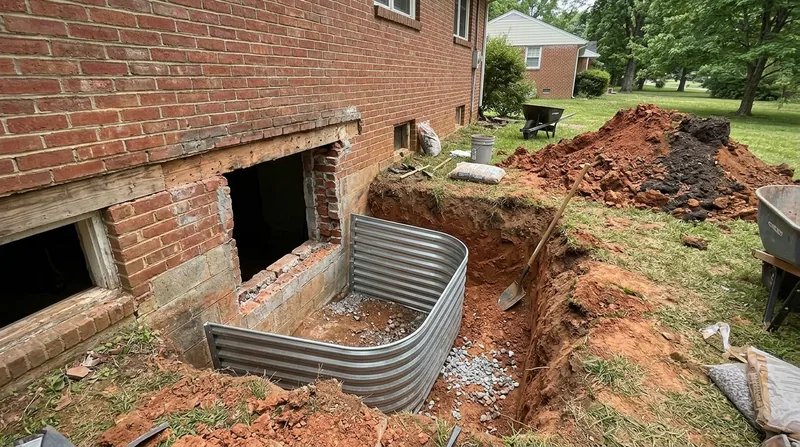




Egress Window Installation in Lynchburg: Cut, Frame, and Drain It Right the First Time
If you are finishing a basement in Lynchburg, an egress window installation in Lynchburg is not optional decoration. It is the code-required escape path and the daylight source that makes a below-grade bedroom legal and livable. Lynchburg's housing stock makes this a real structural job: 1900s brick and frame houses in Fort Hill, Diamond Hill and the Rivermont streets sit on steep lots with stone or early block foundations, while 1940s-1960s brick ranches in Boonsboro and Tyreeanna have partly finished basements that were never designed for a window cut. In Forest and Timberlake, poured concrete walkouts on the hills look simple until you hit the water table. We cut, frame, flash and drain the opening so the new window does not become the next wet basement entry point. Start with a free basement inspection before you frame a single wall.
Why Egress Window Work Matters on Lynchburg's Clay and Steep Lots
Most of the ground here is Piedmont red clay over granite and schist bedrock. That clay drains slowly, stays saturated after storms, and pushes hydrostatic pressure against the footing. Cut a window well into it without a drain and you have built a bucket against your foundation wall. The freeze-thaw cycle that opens cracks in older block walls also heaves an unbraced well. And the James River bottoms and the creeks draining the hills rise fast after tropical remnants and summer thunderstorms, so a well that stays dry in July can fill in September.
- Hydrostatic pressure against the new opening is the number one cause of a wet basement after an egress cut.
- Older stone and brick walls in Fort Hill and Diamond Hill need lintels and proper framing, not a saw cut and a hope.
- Window wells must tie into a drain, not just sit on clay.
- Poured concrete basements in Forest and Timberlake cut cleanly but expose the footing drain if you go too deep.
- Efflorescence and a musty basement smell near the cut tell you moisture is already moving.
We treat the egress window as a drainage project first and a carpentry project second, because that is the order the water respects.
Key info: A 1930s Rivermont house we inspected had a window well cut by a previous owner with no drain. The first heavy storm after a tropical remnant pushed water through the block wall and soaked new framing. The fix was a drained well tied to an interior perimeter drain, not a bigger window.
Egress openings are regulated, and the rules vary by jurisdiction. Always confirm requirements with the City of Lynchburg building department before cutting: City of Lynchburg official site.
How We Cut, Frame and Drain an Egress Window in Lynchburg
We work from the inside out and the outside in on the same day. First we locate the footing and any drain tile with the wall exposed, then we set the cut line for the required opening size and head height. On older brick and stone we shore and lintel before we cut. On poured walls in Forest and Timberlake we saw a clean opening and inspect the footing drain before we frame. Then we build the well, flash it, and connect the drain so water leaves the opening instead of sitting against it.
- We inspect the wall, footing and existing drainage before any cut is marked.
- We cut the opening to code size and set a proper lintel or header on older masonry.
- We frame, insulate and seal the opening to the wall.
- We install a window well with a drain tied to the footing drain or an interior perimeter drain.
- We flash and parge the exterior so surface water sheds away from the cut.
- We test the drain with water before we close anything up.
If the wall shows bowing or wide cracks at the cut line, we stop and address that first, because a window in a moving wall will leak no matter how well it is flashed.
Key info: A Boonsboro split-level had a partly finished basement with a planned bedroom. The cut line landed within a foot of a settling crack. We repaired the crack with epoxy injection and added a drained well, then cut the opening. The bedroom stayed dry through the next spring thaw.
For the drainage side of the work, see our window well drainage and repair page.
Egress Window Approaches We Use in Lynchburg
The right approach depends on the wall type, the lot slope and how the water table behaves at your address. We do not sell one method for every basement in the city.
| Approach | Description | Best for |
|---|---|---|
| Drained window well with gravity tie-in | Well drains to the footing drain or a French drain on grade. | Lots with slope and a working footing drain. |
| Well with sump connection | Well drain runs to a sump basin with a check valve and discharge line. | Flat lots and clay that will not gravity-drain. |
| Masonry opening with lintel | Shored cut, steel lintel and framed opening in brick or stone. | Fort Hill and Diamond Hill older homes. |
| Poured wall walkout cut | Saw cut with footing protection and exterior membrane repair. | Forest and Timberlake full basements on hills. |
| Waterproofing before the cut | Crack repair or interior drain installed before the opening is framed. | Walls with seepage, efflorescence or a wet basement history. |
We pick the approach after we see the wall and the water, not before.
Egress Window Installation Cost in Lynchburg: What to Expect
Most egress window installations in Lynchburg start around From $4,500 and go up from there. That starting figure covers a straightforward cut in a poured or block wall with a drained well on a lot that already drains. The number moves for masonry walls that need a lintel, deep wells on steep lots, and any cut that runs into a wet basement problem that has to be fixed first. Getting two or three estimates is smart because the scope, not the window, drives the price.
- Wall type matters: brick and stone in Fort Hill cost more to cut and shore than poured concrete in Forest.
- Well depth and drain route add cost, especially when the well has to tie to a sump.
- Existing seepage or a bowing wall has to be addressed before the cut, and that adds scope.
- Access to the exterior matters on steep Rivermont and Diamond Hill lots.
- Permit fees and inspection requirements vary by jurisdiction.
We put the scope in writing, so you compare the same work across bids. See our full pricing overview for detail.
Egress Window Installation Near Me: How to Choose a Contractor Near Lynchburg
You want a contractor who cuts foundations and manages water, not a window dealer who subcontracts the cut. Ask for proof of license and insurance, and get a certificate of insurance before work starts. Get two or three estimates in writing with the same scope. Ask for references from jobs in Lynchburg, Forest or Madison Heights with the same wall type as yours. Confirm who pulls the permit, because egress cuts are commonly permitted and the rules vary by jurisdiction. If you are in an HOA, check the well and window exterior requirements before you order materials.
- Verify the license and insurance, and ask for the certificate in writing.
- Get at least two estimates with identical scope and a drain plan.
- Ask how the well drains and where the discharge line goes.
- Confirm who files the permit with the local building department.
- Check HOA rules on exterior well and window appearance.
If a contractor cannot explain where the well water goes, keep looking. Reach us through our contact and free estimate page.
Egress Window Installation in Lynchburg: Pricing Guide
| Service | Price | Details |
|---|---|---|
| Standard egress cut, poured or block wall | Starting at $4,500 | Includes cut, framing, window and drained well on a lot that already drains well. |
| Masonry wall with lintel | Starting at $5,800 | Brick or stone wall in Fort Hill or Diamond Hill with shoring, steel lintel and framed opening. |
| Deep well with sump tie-in | On estimate | Steep lot or slow clay where the well must drain to a sump basin and discharge line. |
| Waterproofing before the cut | On estimate | Crack repair or interior drain needed when the wall shows seepage or efflorescence first. |
| Travel | Included | In Lynchburg and surrounding areas, with no separate call-out or mileage fee. |
| Estimate | Free | Response within 24h at (434) 266-6497, with no obligation to book. |
Indicative pricing, the exact cost depends on square footage, finish, and site access. Free personalized estimate within 24h at (434) 266-6497.


