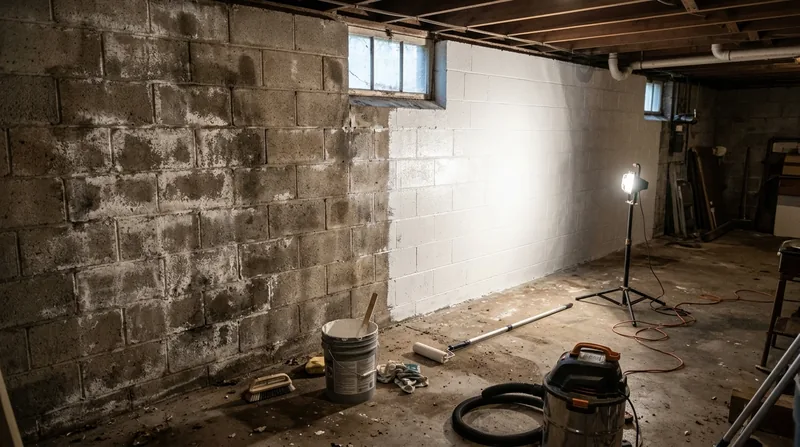




If you own a house in Lynchburg, you already know the ground under it. The red clay across the Piedmont hills holds water for days after a summer storm, and on the steep streets of Fort Hill and Diamond Hill it runs downhill until it finds a footing. Basement Wall Sealing in Lynchburg is the first line of defense for that dampness: it stops the slow seepage that leaves chalky white efflorescence on old brick and stone walls, and it tells you honestly when sealing is enough and when the real problem is hydrostatic pressure pushing water through the wall. We work on 1900s brick and frame houses on the Rivermont streets, 1950s split-levels in Boonsboro and Tyreeanna, and poured concrete full basements in the Forest and Timberlake subdivisions. If your wall is damp but not leaking under pressure, sealing is a smart, affordable move. If water is standing at the cove base after every storm, we will tell you that an interior drain tile system is the better answer. Start with a free basement inspection and we will show you which problem you actually have.
Why Basement Wall Sealing Matters on Lynchburg's Clay and Hillsides
Most Lynchburg basements sit in glacial clay soil that drains slowly and stays saturated long after the rain stops. That saturation drives water vapor through brick, block, and early poured concrete, and the freeze-thaw cycle of a Blue Ridge winter opens hairline cracks in older block walls a little wider every year. Sealing the wall surface slows vapor movement and sheds minor seepage, which is exactly what a damp but structurally sound wall needs.
- Stop efflorescence by sealing the wall against the moisture that carries salts to the surface.
- Reduce musty basement smell by cutting the vapor that feeds it.
- Protect parging and paint from blistering and peeling on old brick and block.
- Buy time on hairline cracks while you decide whether injection repair is the right fix.
Sealing is not a substitute for drainage, and we will never sell it as one. When the water table rises and hydrostatic pressure builds at the footing, the answer is drainage, not a coating.
Key info: A 1920s brick house on a Rivermont hillside can show efflorescence on the wall while staying dry at the floor. That is a sealing job. A 1980s Forest walkout with water at the cove base after every storm is a drainage job. Same city, different fix.
For official guidance on permits and contractor requirements in the Lynchburg area, the City of Lynchburg website is the place to verify local rules before any work begins.
How We Seal Basement Walls in Lynchburg, Step by Step
We start by finding out why the wall is wet, because sealing a wall that is under hydrostatic pressure just traps moisture behind the coating. Our crew walks the perimeter, checks the footing line, probes for soft mortar and failed parging, and reads the efflorescence pattern to see where the water is coming from. Only then do we choose the sealer.
- We inspect the wall and footing and confirm whether the problem is vapor, seepage, or active pressure.
- We remove efflorescence, loose mortar, and failing parging so the sealer bonds to sound masonry.
- We repair hairline cracks and voids with hydraulic cement or epoxy before any coating goes on.
- We apply a penetrating sealer on brick and block, or a membrane sealer where the wall needs a barrier.
- We check grading and downspout extension so roof water moves away from the wall instead of back into the soil.
- We walk the wall with you and explain what the sealer will and will not do.
If the inspection shows active pressure, we say so and point you to the right system instead of coating the wall and taking your money.
Key info: On a 1950s brick ranch in Boonsboro, we sealed a damp block wall and extended two downspouts four feet past the foundation. The wall dried out within a season. On a Timberlake walkout, the same symptoms came from a failed footing drain, and sealing alone would have failed within a year.
When the wall is damp and the floor stays dry, sealing is the right call. When water is rising, pair the diagnosis with an interior drain tile system and solve the pressure at the source.
Sealing Methods We Use on Lynchburg Basement Walls
Not every wall takes the same product. Old brick in Fort Hill behaves differently from poured concrete in Forest, and a wall with active seepage needs a different approach than one that is merely damp. Here is how we match the method to the wall.
| Approach | Description | Best for |
|---|---|---|
| Penetrating sealer | Soaks into brick or block and blocks vapor without trapping moisture. | Damp masonry walls with efflorescence and no standing water. |
| Membrane sealer | Forms a flexible barrier over the wall surface and bridges hairline cracks. | Poured concrete walls with minor seepage and visible cracks. |
| Parging repair plus sealer | Rebuilds failed mortar and parging before sealing the wall. | Older stone and brick walls with crumbling surface mortar. |
| Crack injection plus sealer | Epoxy or polyurethane injection closes the crack, then the wall is sealed. | Walls with a defined leaking crack and damp surrounding masonry. |
| Drainage-first diagnosis | We recommend drainage instead of sealing when pressure is the cause. | Walls leaking at the cove base after storms or snowmelt. |
Every method starts with the same question: is this wall damp, or is it under pressure? The answer decides the product.
Basement Wall Sealing Cost in Lynchburg: What to Expect
Most basement wall sealing jobs in Lynchburg start around $1,500, and that figure covers a typical perimeter of damp block or brick with standard surface preparation, efflorescence removal, and one sealer application. From there, the price moves with wall length, wall condition, and whether crack repair or parging rebuild is needed first. A small single-wall job can come in below that starting point, while a full perimeter on a large Forest basement with heavy efflorescence and several cracks will run higher.
Access matters too. A steep Rivermont lot with a narrow side yard takes longer to set up than a flat Boonsboro ranch. So does a basement packed with stored belongings. Getting two or three estimates is smart because the diagnosis should match the price, and a contractor who quotes sealing without checking for hydrostatic pressure is guessing.
Our full pricing overview breaks down the ranges by scope so you can compare quotes on equal footing. Ask each contractor what preparation is included, because the cheapest quote often skips the efflorescence removal that makes the sealer last.
Basement Wall Sealing Near Me: How to Choose a Contractor Near Lynchburg
Hiring for basement wall sealing near Lynchburg comes down to a few checks that separate a specialist from a general handyman. Ask for the license and insurance certificate, get at least two written estimates, and ask each contractor to explain why they chose the method they proposed. A crew that cannot tell you the difference between vapor and hydrostatic pressure is not diagnosing your wall.
- Verify licensed and insured status and ask for the certificate before work starts.
- Get two or three written estimates that list preparation, product, and warranty terms.
- Check local references from neighborhoods with the same wall type as yours.
- Ask about permits where the work touches structural repair or drainage, and confirm the rules with the local building department.
- Confirm the warranty is transferable and read what it actually covers.
We are happy to walk you through our own process and show you the product data before you decide. Reach out through our contact page and we will set up a free inspection at your convenience.
Key info: A sealing quote that never mentions efflorescence removal, crack repair, or grading is a coating, not a solution. Ask what happens behind the sealer when the clay stays wet.
Sealing a damp wall is straightforward work when the diagnosis is right, and we would rather tell you the truth about your wall than sell you a coating that fails next spring.
Basement Wall Sealing in Lynchburg: Pricing Guide
| Service | Price | Details |
|---|---|---|
| Single wall sealing | Starting at $1,500 | Includes surface prep, efflorescence removal, and one sealer coat on a typical wall. |
| Full perimeter sealing | Starting at $2,800 | Covers the full basement perimeter with prep and sealer, priced by wall length. |
| Sealing with crack repair | Starting at $2,200 | Adds epoxy or polyurethane injection on active cracks before the sealer goes on. |
| Complex or large-scale job | On estimate | Heavy efflorescence, failed parging, or difficult access needs an on-site look first. |
| Travel | Included | In Lynchburg and surrounding areas, no separate call-out or mileage fee. |
| Estimate | Free | Response within 24h at (434) 266-6497, no obligation to book. |
Indicative pricing, the exact cost depends on square footage, finish, and site access. Free personalized estimate within 24h at (434) 266-6497.


